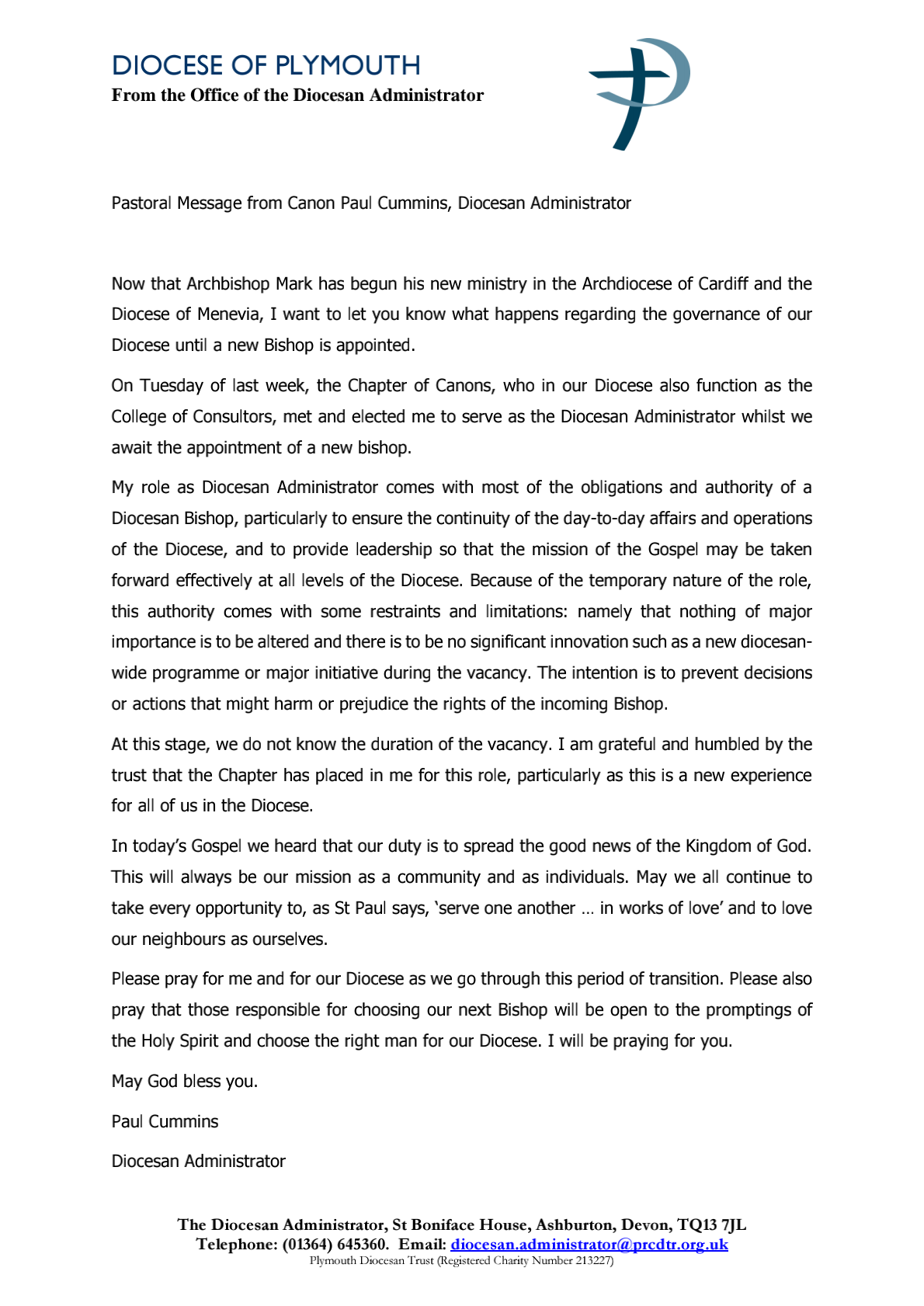
Ginny Young celebrated a significant birthday in style last week, with a huge turnout by family, fellow parishioners, local village friends and hospital colleagues at a surprise party master-minded by her sons and daughter. The large number of parishioners was a good reminder of how being church is being a family
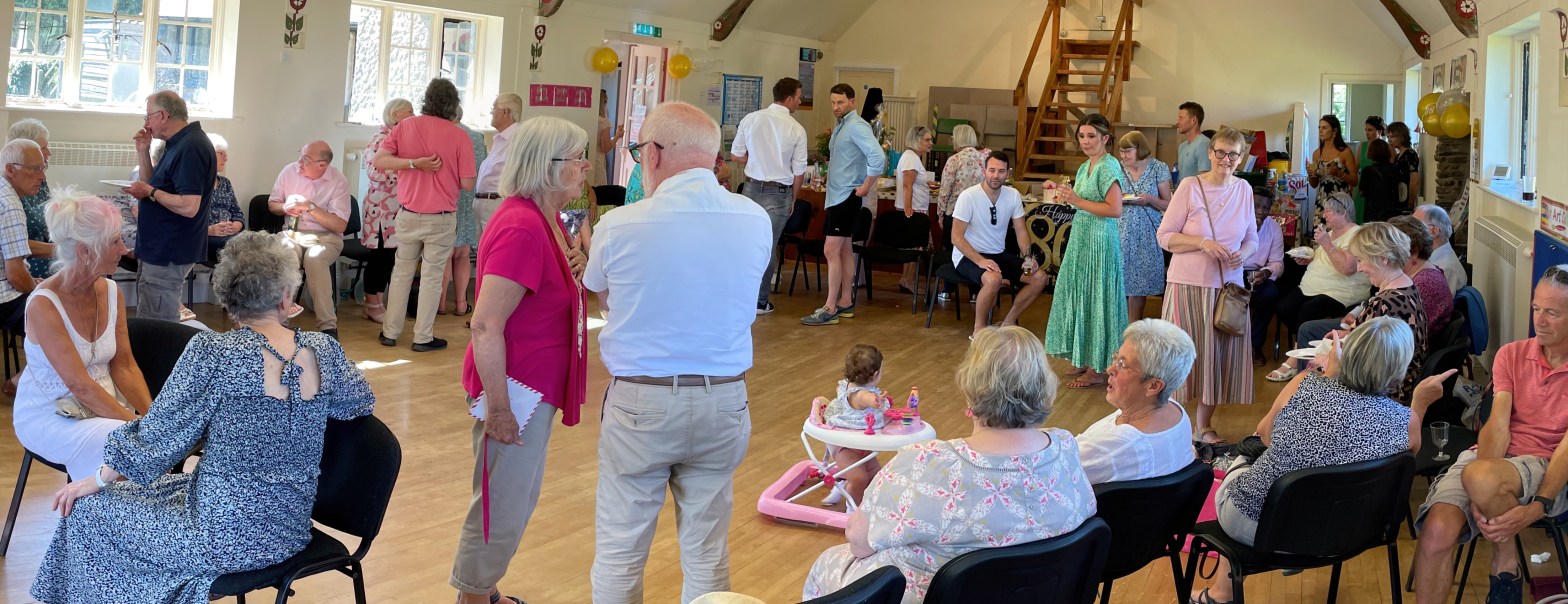
entrance by a shocked Ginny!
As you can see, it really was a surprise to Ginny, who was stunned when she walked into a hushed and waiting crowd in the hall!
There has never been a more important time to care for the planet. Decades of aggressive farming techniques have destroyed ecosystems, endangered species and done great damage to creation. The Green Abbey initiative at Sclerder Abbey starts with sustainability in mind and provides an opportunity to discover permaculture, in practice and theory, in the prayerful atmosphere of the Abbey.
Everyone is welcome to join in this ecological adventure. As you can see below, prayer is one of the four pillars of this project, but people of all faiths and none are equally welcome. The Green Abbey stands on four pillars
Pillar 1: work in the abbey and its grounds
As we are at the start of this project, there is lots of groundwork that needs to happen – preparing the land for growing vegetables, developing sustainable techniques, learn ing what crops thrive here – and much more!
There are also ongoing jobs like tending the well-established orchard, cooking meals and helping around the abbey.
Help is also needed with setting up a database to analyse inputs and outputs for the project.
Pillar 2: community life
If you’ve been involved with Chemin Neuf before, this won’t come as a surprise! We want to live out this project as a community, learning from one another and enjoying the fraternal way of life. This includes meals together, opportunities to share and the possibility to meet people from different backgrounds.
Pillar 3: prayer
All are invited to join in with our rhythm of prayer. This involves daily offices, a weekly prayer group and times of guided personal prayer. Our spirituality is rooted in both the Ignatian tradition and Charismatic Renewal, so these feed into our ways of praying. We want to seek God in all that we do, remembering that we are stewards of His creation.
Pillar 4: formation to become better stewards
Whilst you will be living out permaculture in practice, we also want to equip you with some ecological theory (and theology, for those interested). This might involve meeting others who are further on the permaculture journey, watching relevant documentaries and visiting local projects. And it’s not just one-way. We want to learn from you too!
Following immediately on the installation of Archbishop Mark in his new ministry in Cardiff, the Chapter of Canons in Plymouth this week elected Canon Paul Cummins as our new Diocesan Administrator while we await the appointment of a new Bishop for our Diocese. We still do not know when that might be.
Canon Paul was ordained in 1988 and is a priest with strong pastoral experience, having served as parish priest in Sidmouth since 2011; he is also our Episcopal Vicar for Clergy, leading the diocesan team responsible for vocations, formation and care of the clergy in our diocese.
Canon Paul asks for our prayers during this transitional period. He informs us that his role is mainly to provide continuity and leadership to ensure that we carry out our mission of the Gospel, rather than to launch any new major programmes or initiatives that might pre-empt or prejudice the priorities of our next Bishop.
We are also asked to pray that the selection of our new Bishop will be guided by the Holy Spirit.
The full pastoral letter from the Diocesan Administrator can be read here
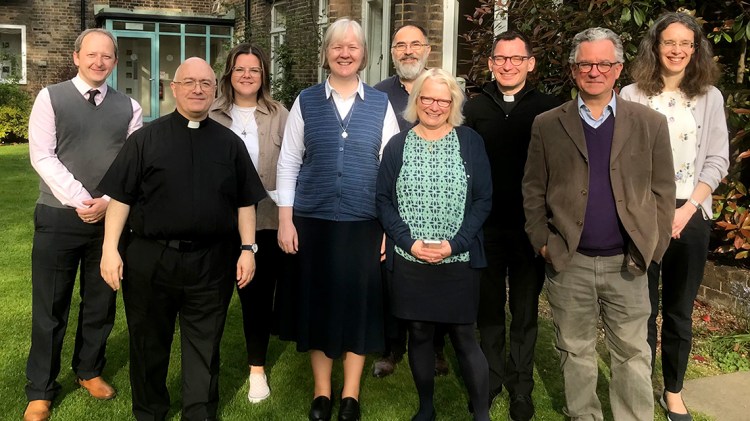
(Photo: the national synthesis team, from the CBCEW website)
The Synod National Synthesis was released yesterday, on 28June 2022. Prepared by the National Synthesis team for the Bishops Conference, it reflects the Synod Reports from each of the Dioceses across England and Wales. These in turn summarised the contributions of an estimated 30000 submissions from across all the dioceses in England and Wales.
A Wounded Church
The Synthesis acknowledges that the Church is “significantly wounded in its ability to act according to its own mission, to let its goodness shine out, and to live its life in a way that expresses the beauty of the faith”. It needs healing and conversion, particularly in the way it fails to welcome; the relationships between clergy and laity; the widespread perception of “the church” as something belonging exclusively to the clergy; the absence of any culture of participation and collaboration; the lack of formation of laity and clergy alike in mission-critical issues; and the failure to communicate effectively.
These wounds all hamper the Church in its ability to fulfil its mission.
Truth, Mercy and Welcome
“The vision of a Church that does not firstly judge and exclude but unconditionally embraces”
The synthesis records strong critiques of the way the Church teaches, presents itself, and operates. There is a strong desire shining through, for a Church that performs God’s mercy as well as proclaims His truth – “to live better the tension of truth and mercy, as Jesus did”. This is manifested in key facets of Church behaviour causing widespread unhappiness:
the perceived inconsistency and hypocrisy in the way some Church teachings are enforced (e.g. matrimony, divorce, Holy Orders and the Eucharist)
the perceived failure to welcome, and in particular to recognise and integrate various groups or categories of people, especially women, young people, LGBTQ+, the divorced and remarried, the traveller community, people of colour or with additional needs, and traditionalists
Towards a synodal church
“If there is a single, overriding melody in the synod symphony, it is in the desire for a more fraternal and sororal Church in which God’s overflowing, universal love can be more palpably felt and lived”
The Synthesis affirms that our mission is deeply bound up with our communion in Jesus Christ, and that this communion gives the church “the face of synodality.”
Although the process has been stumbling, uneven and very limited so far, participants have found the experience both novel and transformative. There is a widespread enthusiasm for synodality as “the way of being church”, and a call for church authorities to take the necessary steps now to embed the processes, structures and the cultural changes into dioceses and parishes.
A number of recommendations are set out to move us forward on the path of synodality, including development of parish councils, mechanisms for listening and consultation, communications, small groups to promote personal conversion, formation in discernment and synodal processes.
The Synthesis concludes by declaring that the Spirit has, through the Synod, awakened a new sense of responsibility in the faithful here for the conversion of the Church which we must respond to with confidence without waiting on others to enact this change or that new structure.
The Conference of Bishops are to meet this week to discern, discuss and respond to this Synthesis.
“The urgent challenge to protect our common home includes a concern to bring the
whole human family together to seek a sustainable and integral development, for we
know that things can change. The Creator does not abandon us; he never forsakes his loving plan or repents of having created us.” Laudato Si para 13
The Season of Creation begins on 1 September, the World Day of Prayer for the Care of Creation, and ends 4 October, the Feast of St. Francis of Assisi, the patron saint of ecology.
The symbol chosen for this year is the burning bush, which contrasts the light of the HolySpirit that unites Christians with the wild fires that are exacerbating the climate crisis.
Though 1st September may seem a long way off, please spend a little time in the coming weeks considering how you and your family can play your part in the Season of Creation.
• Advocacy: Raise your voice for climate justice by joining CAFOD’s Fix the Food System campaign.
• Prayer: Host an ecumenical prayer service that unites all Christians to care for our common home or
Sustainability: Organise an event reaching a wider public to help people to reflect on the current situation and what we can all do to make a difference.
Caritas Plymouth may be able to help with funding for refreshments and speakers (email caritas@prcdtr.org.uk).
A perfect example of Agro-ecology and permaculture
Did you know that corn, beans, and squash are called the “Three Sisters”? A number of Native American tribes interplanted this trio because they thrive together, much like three inseparable sisters. Instead of single rows of a single vegetable, this method of interplanting introduces biodiversity, which does many things—from attracting pollinators to making the land richer instead of stripping it of nutrients.
Each of the sisters contributes something different and together, they provide a balanced diet from a single planting.
The corn offers the beans necessary support.
The climbing beans pull nitrogen from the air and bring it to the soil for the benefit of all three.
Image credit: University of Illinois Extension
As the beans grow through the tangle of squash vines and wind their way up the cornstalks into the sunlight, they hold the sisters close together.
The large leaves of the sprawling squash protect the threesome by creating living mulch that shades the soil, keeping it cool and moist and preventing weeds.
The prickly squash leaves also keep away rabbits and other pests, which don’t like to step on them.
Together, they provide both sustainable soil fertility as well as a healthy diet.
How to Plant the Three Sisters
There are variations to the Three Sisters method, but the idea is to plant the sisters in clusters on low wide mounds rather than in a single traditional row.
Before planting, choose a sunny location (at least 6 hours of full sun every day).
Plant the beans and squash when the corn is between 6” and a foot high.
Members of the hierarchy, clergy, and laity, who have coordinated the diocesan synodal conversations in England and Wales, recently participated in a National Synod Day in Southwark
Closing the day’s proceedings, Cardinal Nichols said “In this upper room, seeking the guidance of the Holy Spirit, we have had a unique window on the life of the Church in England and Wales – not complete, but a glimpse, a panorama, that we rarely see drawn together in this way. We are learning the art of listening, the discipline of listening, which does not come naturally, but is something that requires self-control and humility. We are learning that. This is a hugely important quality in the life of the Church which has not always been present.”
A Diocesan Response
While we wait for the National Synthesis, we thought that readers might be interested to compare the overlaps and differences in responses, by reading our very short (500 word) summary of the Report from Salford Diocese here
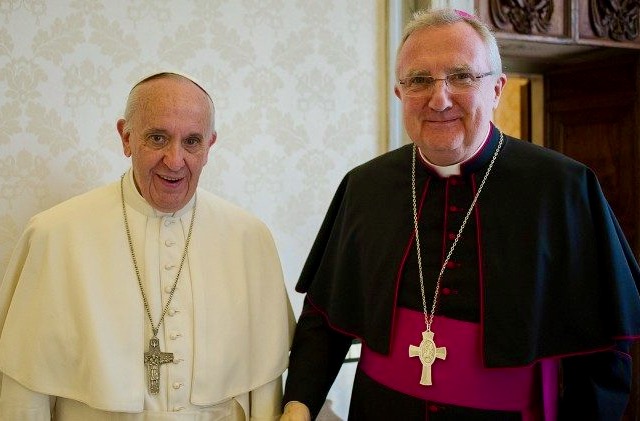
On Sunday 29 May, Pope Francis announced that Yorkshire-born Archbishop Arthur Roche will be made a Cardinal in a ceremony on 27 August, making him the third English cardinal and one of two cardinals from England eligible to vote in any future conclave to elect a new pope.
Archbishop Roche is one of 21 new cardinals mostly from distant corners of the world, including two Indian bishops, an Italian missionary serving in Mongolia, and bishops in Singapore, Ghana, Nigeria and East Timor. Sixteen of the new cardinals are within the age limit for any future conclave. Archbishop Roche’s promotion follows his appointment last year to lead Vatican’s department for the Liturgy (see The Portico 42)
The Pope also chose to give a Cardinal’s red hat to Robert McElroy, the Bishop of San Diego, in what is reported by America Magazine as “the biggest surprise of this consistory for the church in the United States”. Bishop McElroy is regarded as one of the strongest supporters of the Pope’s vision for the Church, and his promotion has perhaps also sent a strong message in response to recent controversies about Holy Communion, as Bishop McElroy has been firmly opposed to the withholding of Holy Communion from individuals, widely regarded as the weaponisation of the Eucharist.
“Creation is a wondrous gift that God has placed in our hands, so that we may enter a relationship with him and we may recognise in it the imprint of his loving plan.”
(Pope Francis Video Message for Laudato Si Week)
In the spirit of Laudato Si Week, we asked some of our Cornish parishes how they are ‘living’ Laudato Si. Here are some extracts from their responses:
In St Ives/Penzance, Fr Philip reports that the Parish and School re-cycle as much as they can through a variety of routes (including jewellery, coins and currency, mobile, camera’s & gadgets, stamps), and use Fairtrade goods wherever possible. On the Care of Creation day before lockdown, everyone at Mass received a 10 point leaflet: “10 tips to help our Common Home NOW”, and Fr Philip is now keen to re-convene the Care for Creation group, which used to meet before Covid, to consider ‘The Journey to 2030’ a booklet produced by the Ecological Conversion Group, a lay group of Catholics. Penzance Council’s “Sustainable Penzance” leaflet is recommended to parishioners.
St Austell has been a Fairtrade parish for several years, and recycles old jewellery, watches, cameras, mobile phones via a company which pays CAFOD from the proceeds. Parishioners also made a point of buying local milk in glass bottles for refreshments after Mass. The Justice and Peace group is being revived imminently, so it is hoped to also revive plans to register for the Live Simply award which were put on hold due to the pandemic.
From Liskeard and Saltash, Fr Gilmour writes that the Chemin Neuf Community at Sclerder Abbey, much inspired by Laudato Si, is considering a project to develop community working on the farm and gardens there. Also at Sclerder, a parishioner was involved in the production of a publication called “The Slow Path with an associated photographic presentation At Your Own Pace. Books were sold at Mass with donations going to the parish’s Refugee Fund. In Saltash, planting and limited mowing is underway to encourage wildlife.
In Truro, Fr John writes that active consideration is being given to solar panels / a ground source heat pump and battery storage of energy – with cost being one of the main holding factors. Fr John himself drives a hybrid electric car and walks wherever he can. Everything that can be recycled is.







 THE PORTICO Newsletter