A Precious Place, revisited

At last week’s Synod briefing the Vicar General Fr John Deeny echoed Bishop Mark’s pastoral message that A Precious Place continues to be “a key point of reference” for us. 

Fr John spoke of A Precious Place as an ongoing journey, and explained that the synodal process dovetails with the Diocesan initiative, each feeding into the other – one local and the other universal.

Several in the audience appeared not to know of or had forgotten about PP, probably because the pandemic severely cut short or prevented activity. We perhaps need to re-energise A Precious Place locally, if we are to continue fruitfully down this path.

A Precious Place, our PORTICO Special Edition, and our Supplement (short summary) can all be downloaded here

A Decisive Time for the Church

by Tony Barber

Pope Francis has set us on a two year synodal journey, culminating in the final Bishops’ synod in October 2023.  Before then we, the whole church including the laity, are invited to participate in that journey. Bishop Mark in his inaugural address in the Cathedral on 17th October was careful to point out that this synod was primarily an opportunity for us to listen to each other. At a local church level this part of the journey is expected to finish by April 2022, so there is an urgency to move quickly.  The process of listening and discernment in our parish has already started; there have been three lay facilitators appointed in our parish (we hear unofficially that they are Patrick McGovern, Jean Anderson and Richard Fish) who are tasked to convey our views to the Bishop; how they intend to do this we shall doubtless learn from them in due course.  

I was pleased to learn that the facilitators will have a free hand and no topic will be barred from discussion. There will be no filtering of our views and individuals or groups will be free to make their own submissions. This is a unique opportunity to take part in the synod journey. I pray we can seize that opportunity with enthusiasm. To assist us the Vatican have published an Official Handbook for Listening and Discernment in Local Churches (www.synod.va/en/documents/vademecum.html). 

Well worth a study.

Back at Buckfast!

Buckfast Abbey has re-opened its doors for the Truro Men’s Retreat to take place later this year. The monks have graciously welcomed this retreat for ten years, last year being the gap in the otherwise unbroken series. Hosted in the monastery itself, the retreat will be restricted to smaller numbers and there will no doubt be other changes brought on by circumstances, but it is nevertheless another hopeful sign of adaptation and return to normality

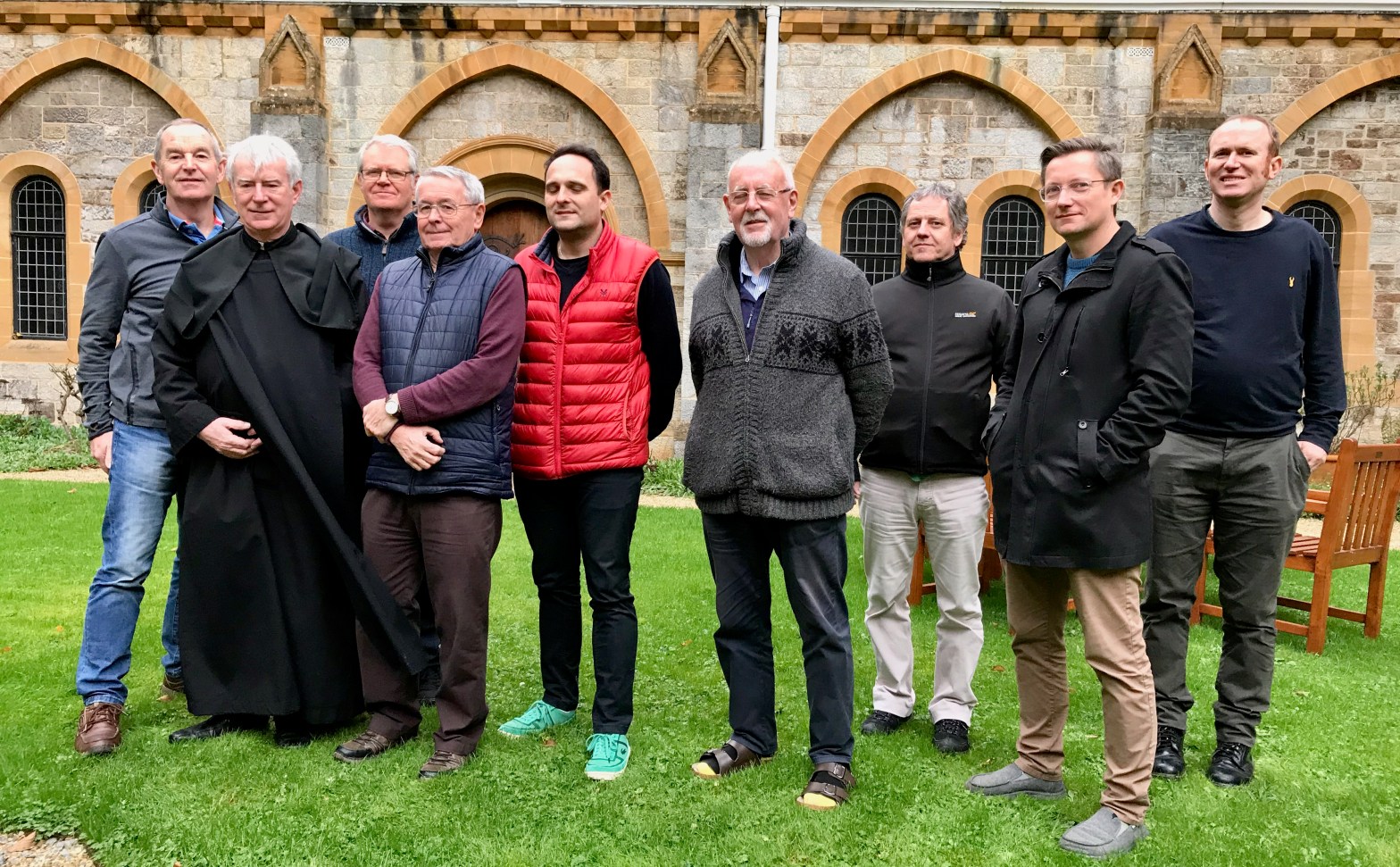
The photo shows some of the 2019 retreat participants with the Guestmaster Prior Daniel.

Cornwall Christmas Box

The Cornwall Christmas Box scheme will be running again this year.

If you’d like to take part, please use the shopping list on the website to start buying the items needed to provide a family of 4 – 6 with food for Christmas Day.

Shopping List and drop-off points  are on the website  here.

If you cannot make up a box on your own, you can contribute to a communal box from our parish by contacting The Portico in the first instance.

If you are making up your own box but need to have it collected, you can also contact The Portico.

Diocesan Synod Briefing

A Diocesan online briefing event was held on 20 October, at which our Diocesan synod co-ordinators Fr John Deeny and Deborah Fisher described the Synod as, not a search for immediate solutions to immediate problems, but a great adventure to reflect on how we must move forward in the future, and to dream how we want the Church to be. It is a world-wide effort at renewal of the church, involving significant and continuing changes. 

Plans to supply supporting materials to parishes during November were briefly outlined, but more details will be published on the diocesan website. The main work will take place by and in parishes, and the diocesan team called for our support everywhere to help ensure that as many people as possible participate in this synod.

The Diocesan team are preparing materials to go out to parishes 18-20 November. It will be up to individual parishes to determine and carry out the most effective ways of getting feedback in their own situation, including particular attention to the housebound, the young, the poor and disaffected, and the wider christian community.

A supporting website is also under construction, and an online feedback form to allow individual submissions.

A wider diocesan event aimed at all in the diocese is planned for 16 November, with keynote speaker Austen Ivereigh.

Feedback sessions are also planned in spring to brief the diocese on the outcomes of the parish consultative process.

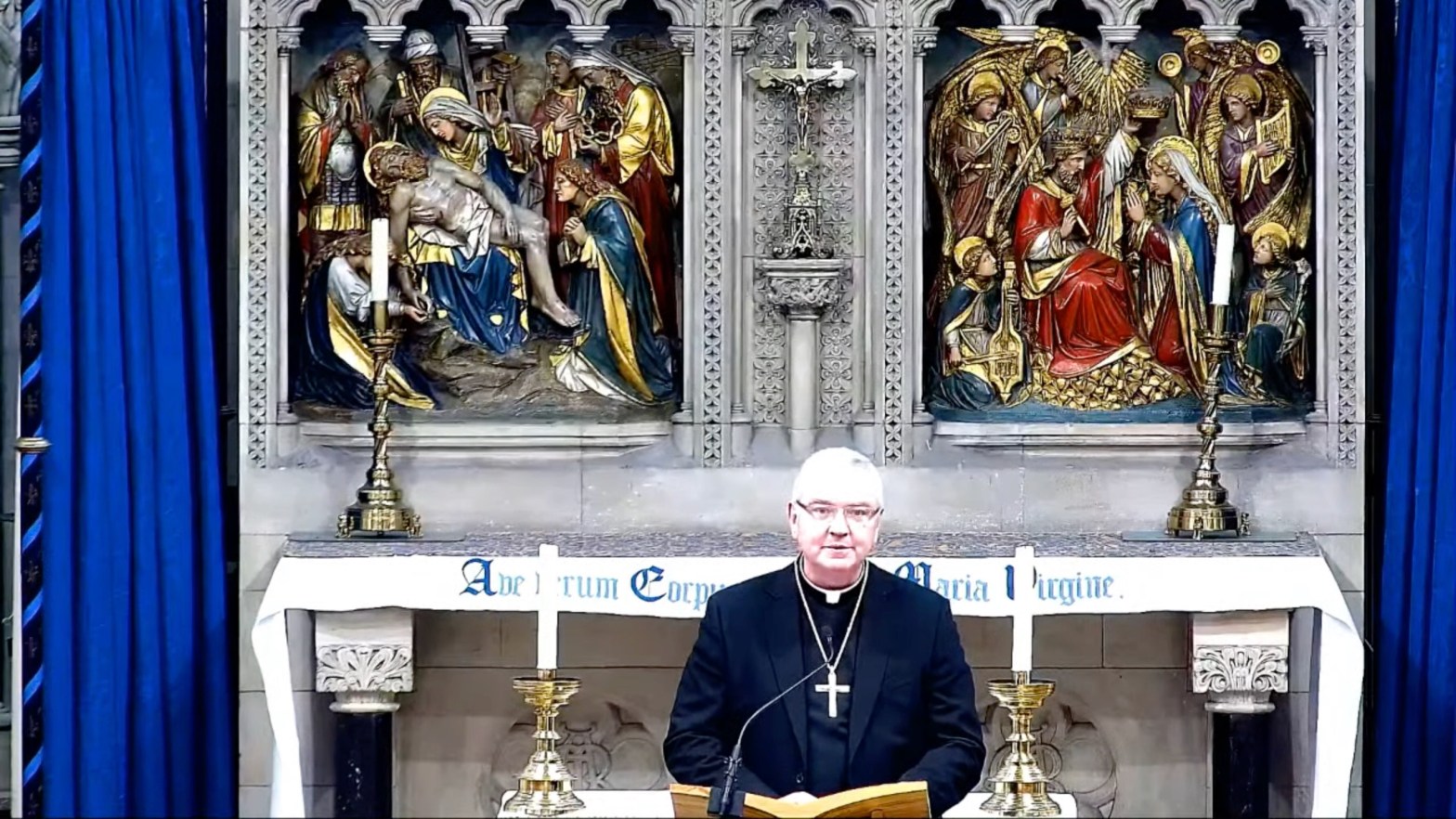
Bishop Mark sends pastoral message for launch of the “Synodal Process”

Bishop Mark sent a message to all in Plymouth Diocese this weekend, as Pope Francis officially launches the Synod “For a Synodal Church” which will culminate in a synod of Bishops in Rome in 2023.

The so-called ‘listening phase’ in each parish, the aim of which is “to foster as broad consultation as possible” and for everyone to have an opportunity to be heard, is planned for Advent – to commence on 29 November and continue during the run-up to Christmas, culminating in  a diocesan pre-synodal meeting early in 2022. 

Perhaps anticipating criticism of the shortness and timing of this ‘listening’ Bishop Mark says he recognises that the timescales seem tight, but that “I encourage you to fully engage with this important process in the life of the Church, locally and universally, so that we can all be more effective missionary disciples.” 

Read Full Text or Watch video

Live Simply, Sustainably, and in Solidarity with the Poor

On 1st October a one day conference was held in Torquay (sponsored by CAFOD and Caritas) The purpose was to revive awareness and implementation of the livesimply initiative in our schools and parishes. The event brought together some great speakers including Marie-Elena Arana (Live Simply Award Co-ordinator); Fr Jonathan Stewart (Church of the Blessed Sacrament, Exeter) whom many will remember from his Truro days; Rt Rev. Dom David Charlesworth,(Abbot of Buckfast); and Nicola Slack (Head of St Mary’s Catholic Primary School in Buckfast).

We were shown how livesimply can be a practical and systematic way for the parish as a community to embody & implement the principles of Laudato Si (and Fratelli Tutti), and can enable us to truly become Guardians of Creation. The examples of how parishes and schools as well as Buckfast Abbey have met the Live Simply challenge is truly inspirational.

Nicola Slack’s presentation is here

and Fr Jonathan’s is here

After being in abeyance for 5 years now, three simple and clear steps are all it takes for us to get up and running again, but Fr Jonathan reflected on the importance of vision and leadership to the success of their parish efforts. He also  emphasised the need to sustain parish initiatives  in the longer term – that gaining the livesimply parish award is recognition of a start, not an end, to living simply as a parish

Bishop Mark: “a time of listening in our local churches”

Following on from the opening by Pope Francis this coming weekend of the Synod For a Synodal Church: Communion, Participation, Mission, Bishop Mark will be launching our Plymouth Diocesan phase on Sunday, 17th October with Mass in the Cathedral. The plan is to follow up soon after with an online gathering, but no details have yet been released.

The proposal is for this phase to take place in our parishes during the Season of Advent. Bishop Mark continues that “The aim is to foster as broad a consultation as possible, reaching out to integrate the voice of the poor and the excluded, and not only engaging those who have some role or responsibility within the local parish” Again, we don’t yet know what out parish plans are or who will be organising activities but will let readers know as soon as we find out.

The Diocesan website also has a set of Plymouth Diocesan “Frequently Asked Questions” with answers.

The Plymouth Diocesan web page on the Synod can be found here

The Synod 2021-2023: what is it?

Pope Francis will open the new global Synod next week on 9 October. The diocesan phase, involving ALL of us, is due to start on 17 October 2021. As we go to press, we still await information and guidance as to how our own Plymouth Diocese phase will be carried out, but will update you as and when.

Meanwhile, the Synod has already sparked some strong and controversial opinions across our Church. The success of the Synod depends in no small part on our willingness to be informed, and to participate actively in the process. This PORTICO 50 Special Edition hopes to help you do that, and can be downloaded from this site.

Synodality: what is it? The word “synod translates as “journeying together” – A journey that reveals how God’s Word, and the people who heed and put their faith in that Word, journey together. The Word of God journeys with us. Everyone has a part to play; no one is a mere extra.

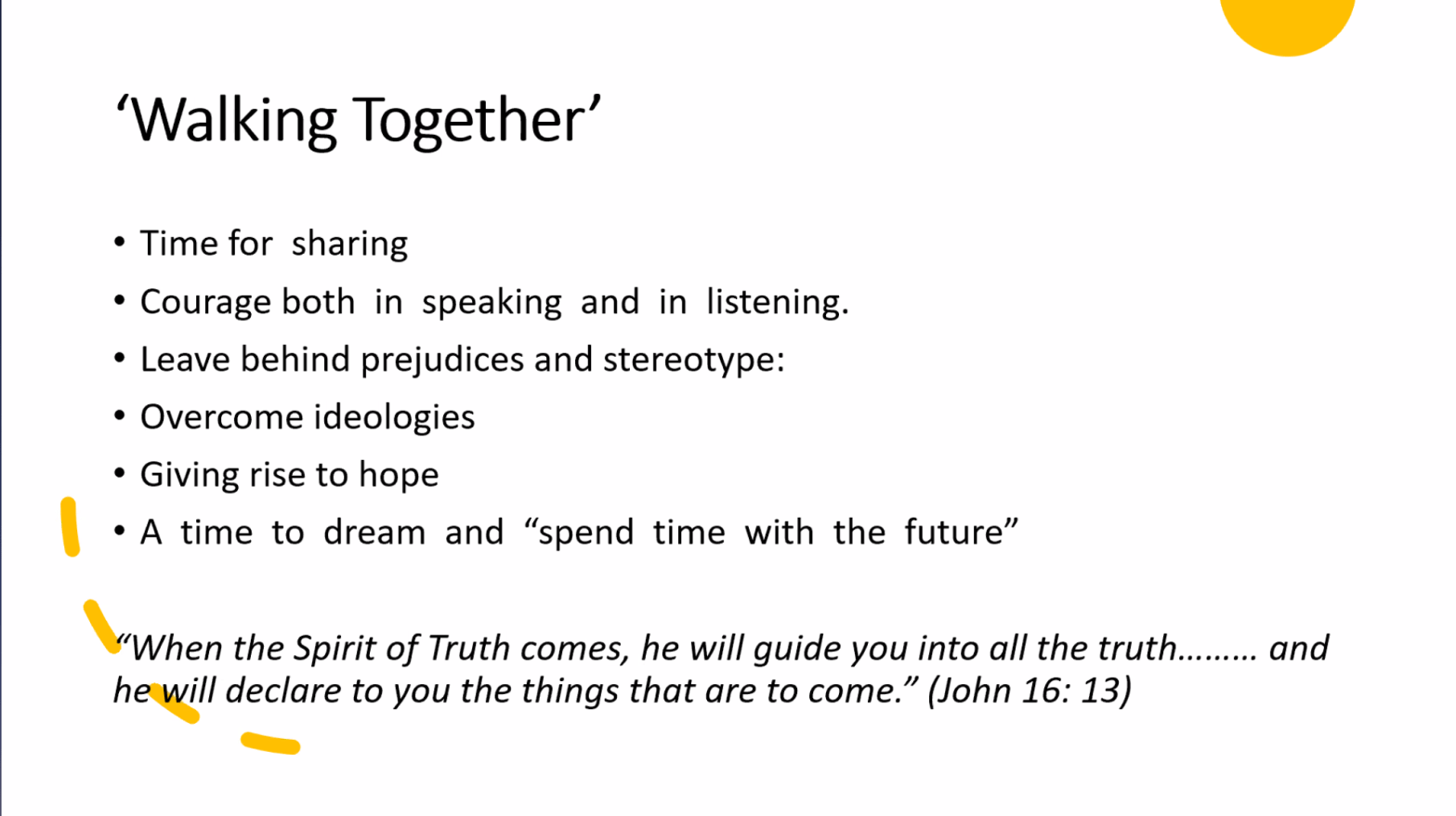
Question: the main question that we are asked to consider is: How is our “walking together” in synodality realized today in the Church? What steps does the Spirit invite us to take in order to grow in our “walking together”? 

The question is HOW, not whether we should. We are NOT asked to express our views on all the existing issues that exist within the Church today – sex abuse, married priests, women priests, sexuality, the Liturgy, reception of Holy Communion, etc etc. 

Instead, we are asked to focus on something that maybe sits underneath all of the above and shapes the environment within which we can address and fix these issues: that is, – how do we live, work and make decisions as a church?

GOAL: “In this Synod, we want to get to the point where we can say, “it seemed good to the Holy Spirit and to us”, for, guided by the Holy Spirit, you will be in constant dialogue among yourselves, but also in dialogue with the Holy Spirit” 

Discernment: a Rough Guide

The Pope calls on us all to participate in discerning how best to realise synodality in the church. So what is “discernment”, this term that has gained currency? 

In many ways it has been a feature the church in the earliest times. and continues particularly in Jesuit spirituality. St Paul refers to “distinguishing between spirits” (Corinthians) while for St Ignatius, it is about “desiring and choosing only what is most conducive for us to the end for which we are created.” 

So the process is about finding the voice of the Spirit of God  speaking to us in the ordinary and practical details of our lives, amongst the clamour of all other voices. It is not just an intellectual exercise, but a profoundly spiritual one. We draw on insights from all our human philosophy and sciences, our social and church norms – but  at the same time we transcend them, leaving ourselves genuinely open to hear and listen to what the Lord says to us in a variety of ways.

Discernment, as a process taught and practised, therefore requires prolonged prayer in dialogue with God, openness, a sincere examination of conscience and a detachment from self. Through these, we strive for an authentic process of leaving ourselves behind so we can approach the mystery of God, to help us carry out the mission to which he has called us, for the good of all our brothers and sisters.

Pope Francis suggested a series of steps or questions we can apply to test the authenticity of our own discernment, here. (3 May 2020)

More recently, discernment in groups as well as individuals has become more commonplace, and the synodal process is perhaps trying for a global exercise in discernment by all the faithful.

(This Rough Guide is based on the briefing for an experimental workshop on Group Discernment held by the Truro Men’s Retreat group, during lockdown).

If anyone is interested to learn more about discernment, either individually or together, please contact THE PORTICO.